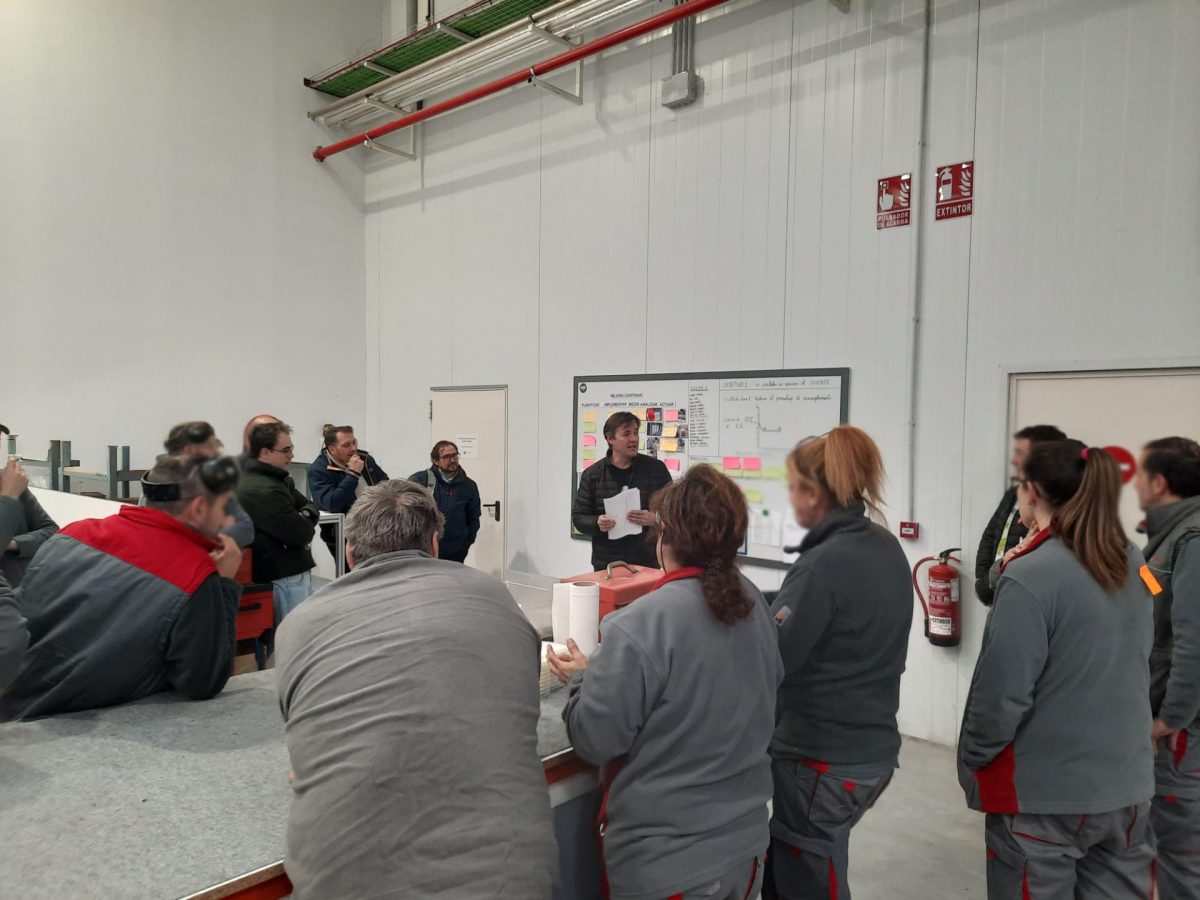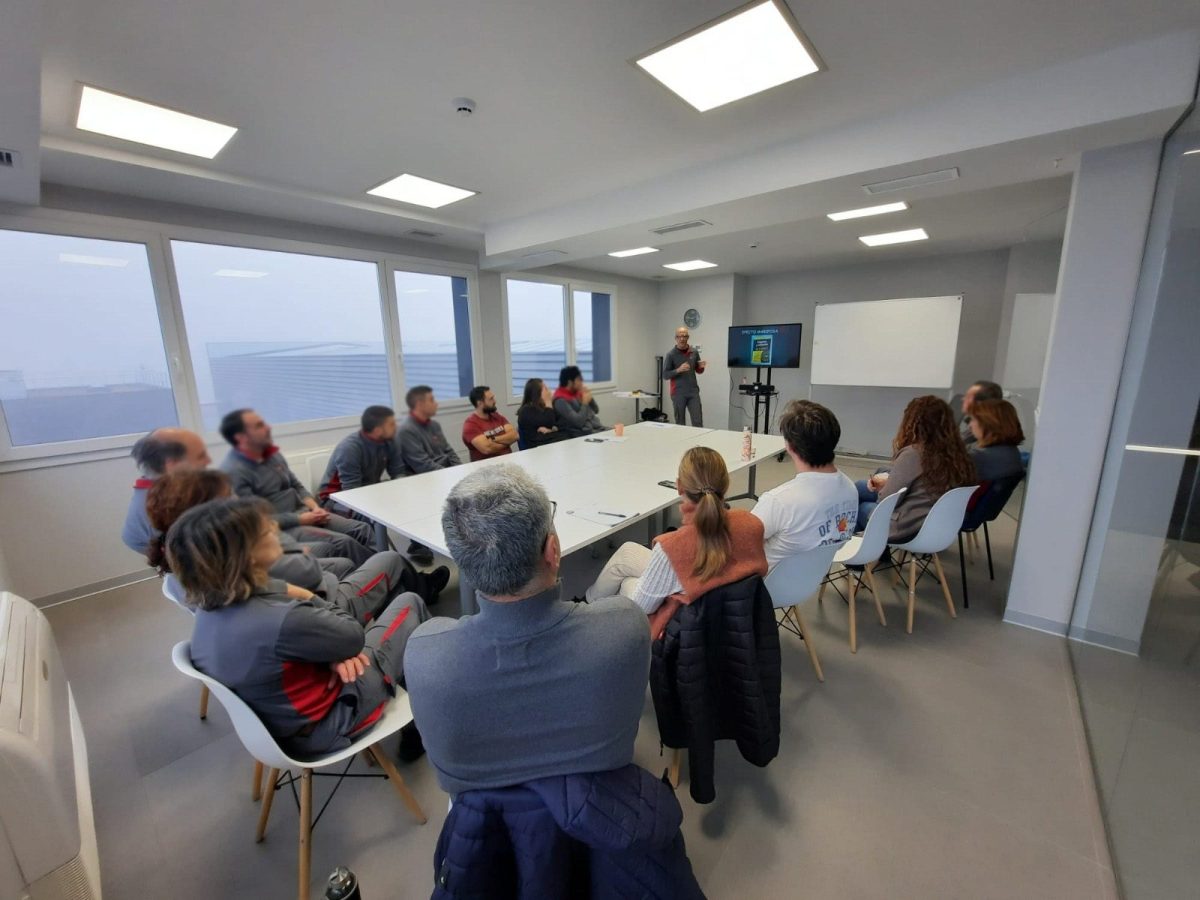

At Maniplastic, we firmly believe that continuous improvement is not just a strategy, but a way of understanding work and evolving as an organization. For this reason, for several years we have been committed to a cultural transformation based on LEAN principles—an approach that promotes efficiency, waste elimination, and the active involvement of all people. This vision not only improves results but also strengthens internal cohesion and team commitment.
Our drive in this direction began when several colleagues took part in the University of Burgos’ own course, #LeanManufacturing. Although we initially expected training focused on tools such as 5S, SMED, or TPM, the experience proved to be much deeper. From the very first sessions, the classic wastes were addressed—overproduction, waiting times, unnecessary transport, rework, or excessive movement—as well as others directly linked to human talent: lack of communication, underutilization of skills, or absence of standardization.
This approach, delivered by professionals who live the LEAN Culture in their day-to-day work, helped us understand that LEAN is not a toolbox, but a way of thinking. Transforming a company requires time, consistency, and commitment. As these experts emphasized, LEAN Culture is not implemented in one or two years; it is built through perseverance and cross-functional participation, as it is a process of continuous learning.
The effects of this vision are already evident at Maniplastic. After the first group of colleagues, two more groups joined last year, and this year another team member has begun the course. In addition, we have launched an internal training program aimed at embedding this mindset throughout the entire workforce, encouraging active participation and a shared vision of improvement.
Technical aspects of LEAN Culture
LEAN Culture is based on fundamental principles that guide the actions of any organization:
1. Waste elimination (Muda)
Identifying and reducing what does not add value is the starting point. The seven classic wastes—MOTION, WAITING, DEFECTS, OVERPRODUCTION, INVENTORY, TRANSPORTATION, and OVERPROCESSING—make it possible to detect inefficiencies in any area.
2. Continuous flow and reduction of variability
The goal is for processes to move forward with as few interruptions as possible. This involves balancing workloads, optimizing layouts, and ensuring that the value chain operates without bottlenecks.
3. Standardization
A process cannot be improved if it is not defined. Therefore, LEAN promotes the creation of clear, visual, and easy-to-apply standards that become the foundation for future improvements.
4. Kaizen and continuous improvement
This is not about major revolutions, but about small, sustained advances. Employee participation is key to identifying real, applicable improvement opportunities.
5. Visual management
Elements such as boards, performance dashboards, labels, or visual flows make it possible to detect deviations immediately and improve coordination between teams.
Main areas of action within a company
LEAN Culture impacts multiple areas:
- Production: reduction of changeover times, flow optimization, waste elimination.
- Maintenance: application of TPM to improve equipment availability and reliability.
- Logistics: improvement of internal routes, minimum inventories, space reorganization.
- Quality: controls integrated into the process and reduction of defects.
- Administration: simplification of procedures, document standardization, and reduced response times.
- People: internal communication, continuous training, and talent development.
At Maniplastic, we continue moving toward a sustainable, efficient, and people-centered business model. Thanks to the training provided by #UBU, the drive of the #LEANCOMMUNITY, and our commitment to the #MAINTENANCECOMMUNITY, we are building a more competitive company and a culture based on constant learning.